Windshield Ceramic Coating vs Rain Repellent in 2026
Windshield ceramic coating vs rain repellent in 2026: how long each really lasts through winter, which causes wiper chatter, and how to pick by climate.
Reader-supported: we may earn a commission from links on this page, at no extra cost to you. It never affects our picks. Learn more.
The short version
- Best overall — Gtechniq G1 ClearVision Smart Glass: a genuine bonded coating designed to survive a full winter of wiper cycles.
- Best for quick, durable results — Aquapel Glass Treatment: one applicator, ten minutes, months of beading.
- Budget pick — Rain-X Original Glass Water Repellent: cheap, available everywhere, needs frequent reapplication.
- Best for low-effort maintenance — Chemical Guys HydroView Ceramic Glass Cleaner & Coating: clean and top up in a single wipe.
- Best streak-free option — Invisible Glass Clean & Repel: for drivers who've been burned by hazing and smearing.
 Best streak-free option · Invisible Glass Clean & Repel — Check price on Amazon →
 Budget pick · Rain-X Original Glass Water Repellent — Check price on Amazon →
 Best for quick, durable results · Aquapel Glass Treatment — Check price on Amazon →
 Best overall · Gtechniq G1 ClearVision Smart Glass — Check price on Amazon →
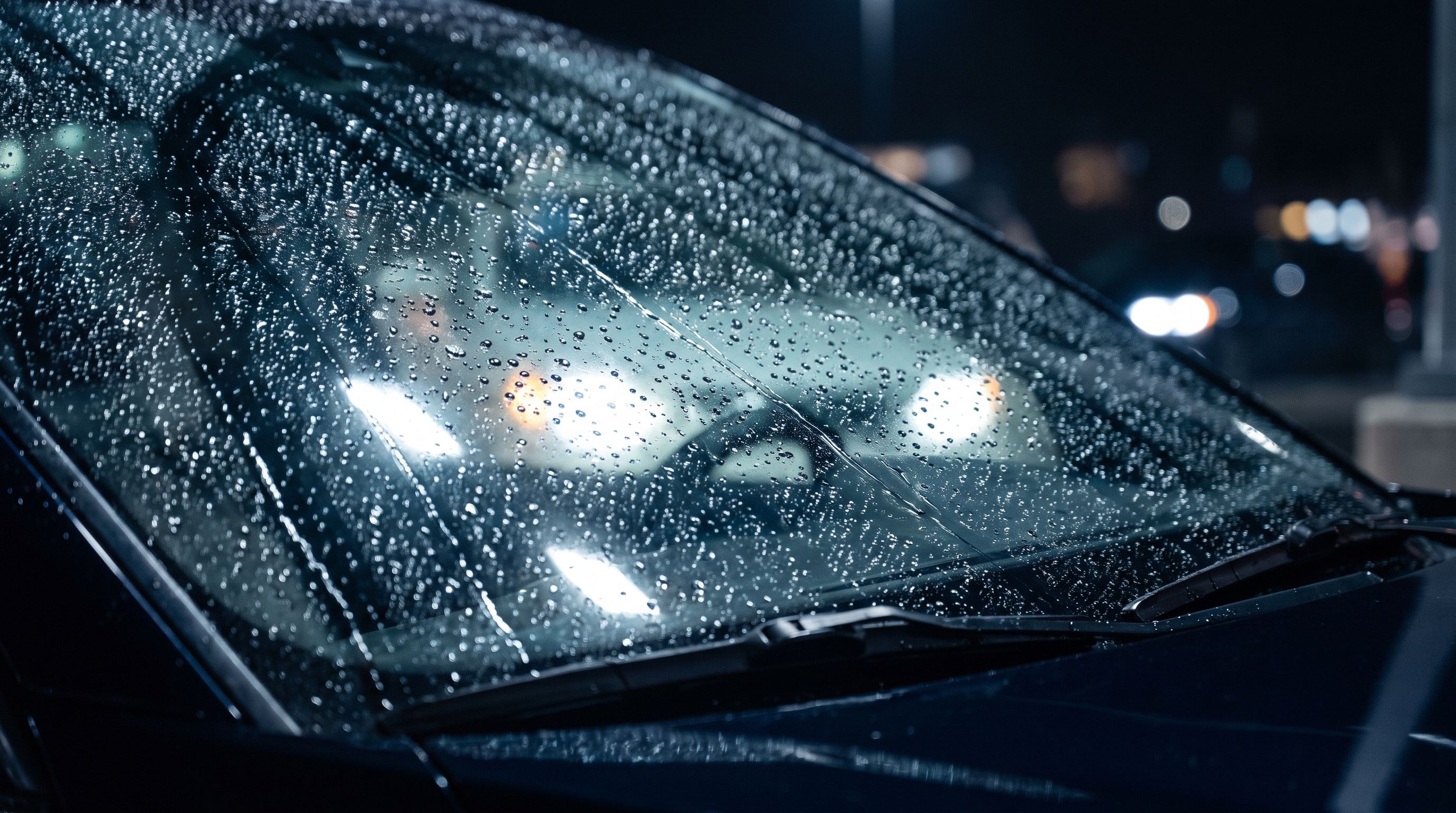
If you've searched "windshield ceramic coating vs rain repellent," you've probably already hit the same wall everyone else does: forums full of people who swear Rain-X is magic and an equal number who say it streaked, smeared and made their wipers judder like a jackhammer. Both camps are right. They're just describing two different chemistries doing two different jobs.
This guide separates the two product classes, explains what actually determines how long a treatment survives a winter, and helps you choose based on your climate and your wipers rather than whichever bottle has the loudest label. GarageProof researches and compares products using manufacturer documentation, independent testing and verified owner feedback — we don't physically test units ourselves.
The two chemistries, plainly explained
Silicone/polymer rain repellents
Classic rain repellents — Rain-X Original being the archetype — use silicone-based polymers that deposit a hydrophobic film on the glass surface. The bond is largely mechanical and relatively weak. That's a feature, not a bug: it's why the product goes on fast, wipes off easily if you mess up, and costs very little.
The trade-off is lifespan. Wiper blades are essentially a squeegee dragging grit across your coating thousands of times per winter. A silicone film doesn't fight back for long. Owner reports converge on a few weeks to a couple of months of meaningful beading in heavy wiper use, and noticeably less if you're running wipers constantly in slush season.
Bonded "ceramic" glass coatings
Dedicated glass coatings — Gtechniq G1 ClearVision and Aquapel are the two most referenced — use silane or fluorinated silane chemistry that forms a covalent bond with the silica in the glass itself. It isn't sitting on the surface; it's chemically attached to it. That's why prep matters so much, and why the durability gap is so wide.
Realistically, a properly prepped bonded coating lasts a season or more on a windshield and considerably longer on side and rear glass where wipers never touch. Note that "ceramic" is a marketing umbrella here — some products sold as ceramic glass sprays are closer to an SiO2-boosted polymer than a true bonded coating, and they behave accordingly.
Where "ceramic spray" products sit
Products like Chemical Guys HydroView occupy the middle: more durable than a plain silicone repellent, far less durable than a dedicated bonded coating, but dramatically easier to apply. They're best understood as maintenance products — a top-up layer rather than the foundation.
Comparison at a glance
| Gtechniq G1 ClearVision | Aquapel Glass Treatment | Rain-X Original | Chemical Guys HydroView | Invisible Glass Clean & Repel | |
|---|---|---|---|---|---|
| Chemistry type | Bonded silane glass coating | Bonded fluorinated silane | Silicone polymer repellent | SiO2-boosted cleaner/coating | Cleaner + repellent hybrid |
| Realistic windshield lifespan | Longest of the group; typically a full season+ | Several months; often most of a winter | Weeks to a couple of months | Weeks; designed for regular reuse | Weeks; reapply with each clean |
| Prep demand | High — full decontamination required | Moderate — clean, dry glass | Low | Very low | Very low |
| Application time | 30–60 min for full glass | ~10 min for a windshield | ~10 min | Under 5 min | Under 5 min |
| Wiper chatter risk | Low once cured | Low | Moderate — most-reported of the group | Low | Low |
| Best for | Cold, long winters; high mileage | Fast fix with real durability | Budget, mild climates, occasional rain | Topping up an existing coating | Streak-sensitive drivers |
How to choose
1. Your climate decides the durability you actually need
In a mild, wet-but-warm climate — think Pacific Northwest drizzle or UK winter — wiper usage is high but abrasion from grit and ice is moderate. A repellent that lasts six weeks is annoying but liveable, and the low cost of Rain-X Original makes frequent reapplication painless.
In a salt-belt winter — Midwest, Northeast, Alpine Europe, prairie Canada — the equation flips hard. You've got road salt, sand, freeze-thaw cycles, ice scrapers and wipers running on half-frozen glass. That's an abrasive environment, and a surface-sitting silicone film is the first casualty. This is where a bonded coating like Gtechniq G1 ClearVision or Aquapel earns its keep: reapplying a repellent in a −10 °C driveway every month is nobody's idea of a good time, and most coatings require above-freezing temperatures to cure properly anyway. Apply before winter, not during it.
Dry, hot climates are the easy case. Rain is rare, so the main benefit is bug and dust release rather than visibility in downpours. Any of these will do; pick by convenience.
2. Your wiper condition matters more than the product
The single most common cause of chatter and smearing after applying a repellent isn't the repellent — it's worn blades. A hydrophobic surface has much lower friction than bare glass, which changes how the blade flips over at the end of each stroke. A blade with a rounded, hardened edge that was just coping on untreated glass will suddenly stutter.
Three practical rules:
- Replace blades at the same time you coat. Treat it as one job.
- Clean the blade edge with isopropyl alcohol on a microfiber after application; residue transferred from the glass is a common chatter source.
- Beam-style blades generally handle coated glass better than traditional bracket blades, which have more points of flex to judder at.
Silicone-edge blades are a special case. They lay down their own silicone film, which can interact unpredictably with repellents and is a frequent source of "my new coating streaked immediately" complaints. If you run silicone blades, a bonded coating is the safer pairing because it's already chemically locked to the glass.
3. Prep is the whole game for bonded coatings
A bonded coating can only attach to clean silica. Any wax, old repellent, oily film from off-gassing plastics, or water-spot mineral deposits sits between the coating and the glass and guarantees early failure.
Minimum prep for a bonded product:
- Wash and dry the glass.
- Clay or use a fine glass polish to remove bonded contaminants and light water spotting.
- Wipe down with an alcohol or dedicated panel-prep solution.
- Apply in the shade, on dry glass, above the manufacturer's minimum temperature.
- Let it cure undisturbed — no wipers, no rain, ideally overnight.
Skip step 2 or 3 and you'll get a month out of a product that should have given you a season, then blame the product. This is the most common failure mode in owner reviews of glass coatings.
For spray repellents, prep is far more forgiving, but a genuinely clean, dry windshield still roughly doubles how long the beading lasts.
4. Streaking tolerance
Some drivers are extremely sensitive to the faint haze that silicone repellents can leave, particularly at night against oncoming headlights. If that's you, the fix is either a thinner application with a thorough buff-off, or a product formulated to clean and repel in one pass. Invisible Glass Clean & Repel is built around exactly that complaint, and HydroView works similarly as a maintenance wipe. Bonded coatings, once properly cured and buffed, are the clearest of the bunch — but they're also the least forgiving if you leave high spots during application.
The picks
Gtechniq G1 ClearVision Smart Glass — best overall
Prices last checked November 5, 2026. Amazon prices change frequently, so treat these as a guide and check the live price before you buy.
Gtechniq G1 ClearVision Smart Glass
A true bonded glass coating with the longest realistic winter lifespan of the group.
G1 is the reference point for serious windshield coatings and the one most often cited when people compare dedicated glass products against consumer repellents. It's a silane-based coating that bonds to the glass, and the payoff is durability measured in seasons rather than weeks — exactly what you want heading into a salt-belt winter. Water starts to sheet off above roughly 40 mph, and bug and ice release improve noticeably. What you give up is convenience: it demands genuine decontamination, careful application in the shade, and a cure period before the glass meets rain or wipers. Rushing it is the fastest way to waste the bottle. Best for high-mileage drivers who'd rather do one careful job in autumn.
Aquapel Glass Treatment — best for quick, durable results
Aquapel Glass Treatment
Single-use applicator that chemically bonds in minutes and typically outlasts any spray repellent.
Aquapel is the pragmatist's answer. It comes as a sealed single-use applicator you snap and wipe across the glass, and the fluorinated silane chemistry bonds to the surface rather than just sitting on it. Application takes about ten minutes on a windshield with no polishing step strictly required, and the durability is consistently reported as several months — far beyond what silicone repellents manage. It's the product professional installers reach for when they want results without a full detailing session. The trade-offs: each applicator covers limited area, you can't decant or stretch it, and it's less forgiving than a spray if you apply it to dirty glass. For most drivers in most winters, it's the best effort-to-durability ratio here.
Rain-X Original Glass Water Repellent — budget pick
Rain-X Original Glass Water Repellent
Cheapest way to get beading tonight; expect to reapply every few weeks in winter.
Rain-X is the product everyone knows, and the criticism it attracts is mostly a mismatch of expectations. As a cheap, instantly available way to get beading on your windshield tonight, it works — the beading genuinely improves visibility in moderate rain, especially at speed. The problems arise when people expect coating-grade longevity. In heavy winter wiper use, expect weeks, not months, and plan on reapplying. It's also the pick most associated with chatter and streaking complaints, usually traceable to worn blades or a heavy-handed application that wasn't buffed off properly. Use it thin, buff it thoroughly, pair it with fresh blades, and treat reapplication as routine maintenance.
Chemical Guys HydroView Ceramic Glass Cleaner & Coating — best for low-effort maintenance

Chemical Guys HydroView Ceramic Glass Cleaner & Coating
Cleans and leaves a light ceramic layer in one wipe, ideal for topping up an existing coating.
HydroView is designed to do two things in one pass: clean the glass and leave an SiO2-based hydrophobic layer behind. That makes it an excellent companion to a bonded coating rather than a replacement for one — a monthly wipe that refreshes beading on glass already protected by G1 or Aquapel, and keeps interior-facing film at bay. Used alone it will bead well but won't survive a hard winter unassisted. Independent comparisons note that ceramic-style glass cleaners can need a second pass to fully clear residue, so work in small sections with two clean microfibers. Best for drivers who want upkeep to take five minutes, not an afternoon.
Invisible Glass Clean & Repel — best streak-free option
Invisible Glass Clean & Repel
Cleaner-plus-repellent aimed at drivers who hate the haze some repellents leave behind.
If your objection to repellents is the night-time haze and smear, this is the sensible starting point. Invisible Glass built its reputation on residue-free cleaning, and the Clean & Repel version adds a hydrophobic layer in the same step. Durability is modest — it's a repellent, not a bonded coating, and reapplication is part of the deal — but the clarity after buffing is a consistent strength in owner feedback. It's also the lowest-risk option on glass you can't easily redo, like a rear window with a defroster grid or an embedded antenna. Give up longevity, gain predictability.
Which should you actually buy?
- Hard winter, high mileage, you plan ahead: Gtechniq G1 ClearVision, applied in autumn, topped up with HydroView.
- Hard winter, you want it done this weekend: Aquapel.
- Mild climate, occasional heavy rain, cost-sensitive: Rain-X Original, reapplied as needed.
- You hate streaks more than you hate reapplying: Invisible Glass Clean & Repel.
And whichever you choose, change the wiper blades. More complaints about glass treatments trace back to tired rubber than to the chemistry in the bottle.
FAQ
How long does a windshield ceramic coating really last through winter? A properly prepped bonded coating like Gtechniq G1 or Aquapel generally holds up through a full winter on the windshield, with performance tapering gradually rather than failing suddenly. Side and rear glass lasts far longer because no wiper abrades it. Spray repellents are typically a few weeks to a couple of months under heavy winter wiper use.
Will a coating or repellent cause wiper chatter? It can, but the usual culprit is worn blades meeting a newly low-friction surface. Replace blades when you coat, clean the blade edges with isopropyl alcohol, and make sure you buffed off all excess product. Chatter that appears immediately after application and persists usually means residue, not a defective coating.
Can I apply a glass coating in freezing weather? Generally no. Most bonded coatings specify a minimum application and cure temperature, and curing on cold, damp glass gives poor bonding and streaks. Apply in a garage or on a mild autumn day before the cold sets in. Spray repellents are more tolerant but still work best above freezing on dry glass.
Do I need to remove old Rain-X before applying a ceramic coating? Yes. Residual silicone film blocks the chemical bond a silane coating needs. Polish the glass with a dedicated glass polish or clay it, then wipe down with alcohol or panel prep before coating. This step is the difference between a season of performance and a month of it.
Is it safe to use these on rear windows with defroster lines? On the exterior surface, yes — defroster grids and antennas are on the inside of the glass. Just avoid aggressive polishing of interior glass surfaces, where those elements are vulnerable.
Does a coated windshield help with ice and snow? It helps ice release and makes scraping easier, and snow tends to slide rather than pack. It does not prevent ice from forming, and you should still never pour hot water on a windshield or run wipers to break ice free.
Get the best car care deals in your inbox
Join the GarageProof newsletter for hand-picked car care deals and new buying guides. No spam, unsubscribe anytime.
Related reads
Polisher Backing Plate Size 2026: Stop Stalling on Curves
Polisher backing plate size guide for 2026: match plate diameter, thread spec, and pad overhang to your DA polisher so pads stop stalling on curves.
Ceramic Coating Maintenance Shampoo 2026: pH That Won't Strip
How to pick a coating-safe car shampoo in 2026: pH-neutral vs SiO2 toppers, gloss boosters, dilution ratios and the washing habits that actually kill ceramic coatings.
Paint Correction Clear Coat Thickness in 2026: When to Stop
How to read a paint depth gauge, budget clear coat microns, and know when to stop polishing — plus the best paint thickness gauges and compounds for 2026.