Dash Cam Mount Around Rain Sensor: What Fits in 2026
Rain sensor and ADAS pods eat the shaded strip on modern windshields. Here's which dash cam shapes and mounts actually fit around them in 2026.
Reader-supported: we may earn a commission from links on this page, at no extra cost to you. It never affects our picks. Learn more.
The short version
- Best overall — Viofo A229 Pro: slim cylinder that disappears behind the mirror, with a low-profile adhesive mount you can place to the millimetre.
- Best for the tightest gaps — Garmin Dash Cam Mini 2: roughly the size of a car key fob, so it slots into strips of glass that defeat everything else.
- Best image quality in a low-profile body — Viofo A329S: 4K STARVIS 2 sensor in a tube-shaped chassis that tucks right up against the headliner.
- Best compact with a screen — Garmin Dash Cam 57: small square body plus a magnetic mount that makes trial-and-error placement painless.
- Best for a mirror-hugging install — Nextbase iQ 1K: tall and narrow, designed to live directly behind the mirror stem instead of beside it.
 Best for a mirror-hugging install · Nextbase iQ 1K — Check price on Amazon →
 Best compact with a screen · Garmin Dash Cam 57 — Check price on Amazon →
 Best image quality in a low-profile body · Viofo A329S — Check price on Amazon →
 Best overall · Viofo A229 Pro — Check price on Amazon →
 Best for the tightest gaps · Garmin Dash Cam Mini 2 — Check price on Amazon →
Why modern windshields are so hostile to dash cams
Fifteen years ago the top centre of a windshield held a rearview mirror button and nothing else. In 2026 that same patch of glass is crowded. A typical new car packs in:
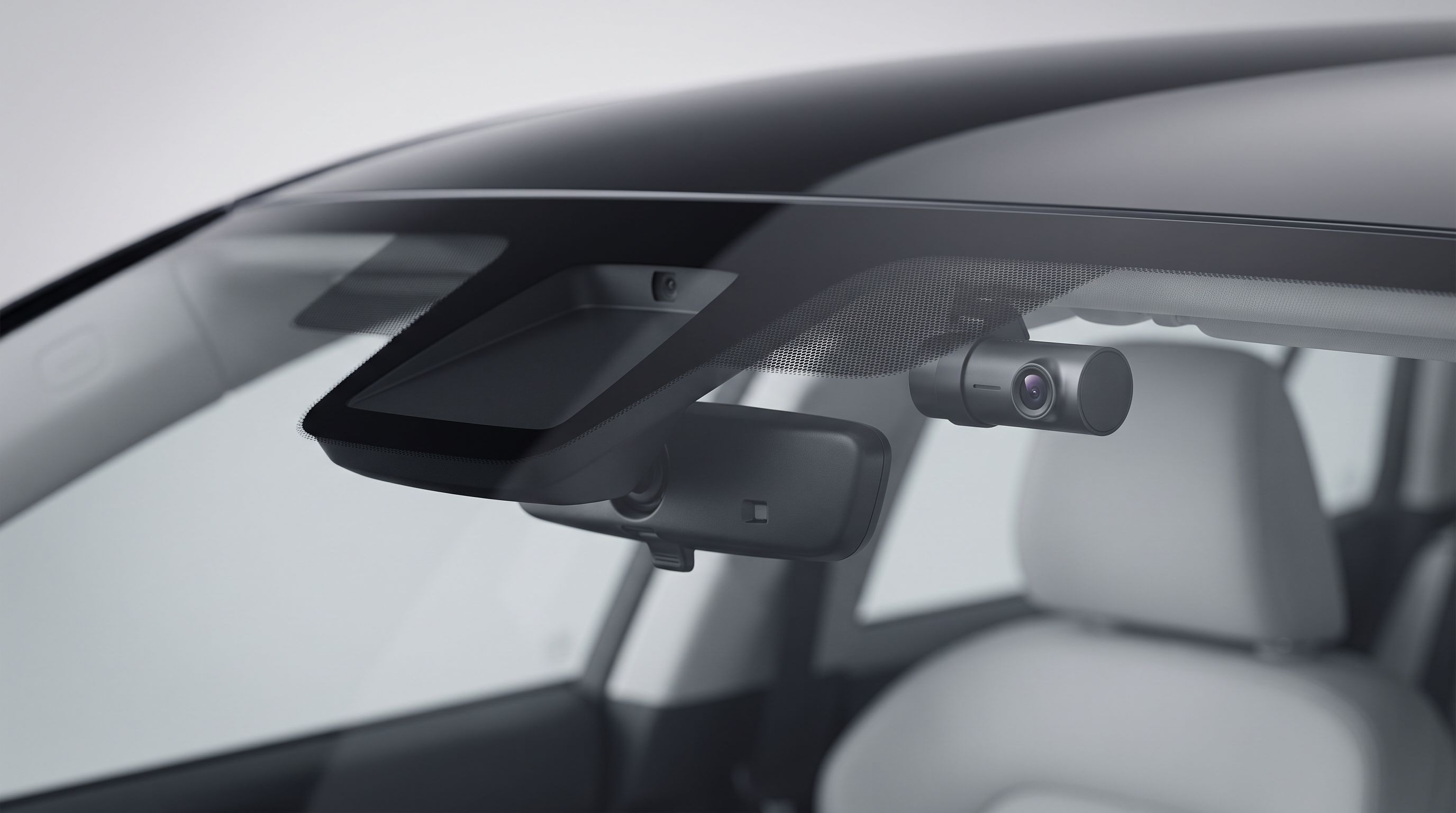
- A rain/humidity sensor, usually a trapezoidal or teardrop plastic housing bonded to the glass with an optical gel pad, sitting just below or beside the mirror stem.
- An ADAS camera pod for lane keeping, traffic sign recognition and automatic emergency braking — often a wide plastic shroud that fans out 6–10 inches across.
- Sometimes a humidity/defog sensor, toll transponder bracket, or heated wiper park zone wiring.
All of that lives inside the black ceramic frit band — the dotted, painted border at the top of the glass. That band is where you want the dash cam, because anything below it is in the swept, legally sensitive portion of the windshield in many jurisdictions, and it looks terrible from outside.
What's left is usually a shaded strip a couple of inches tall running left and right of the sensor cluster, plus whatever space hides directly behind the mirror head. That strip is the whole game. Your dash cam's shape matters far more than its spec sheet when you're trying to work inside it.
Measure before you buy: the three-number method
Before you look at a single product page, take five minutes with a tape measure and write down three numbers.
1. Vertical clearance. From the bottom edge of the ceramic frit band up to the headliner trim, measured at the spot you intend to mount. On many cars this is 40–70 mm. A camera taller than that will either hang into clear glass or collide with the headliner.
2. Horizontal clearance. From the outer edge of the rain sensor / ADAS shroud to the nearest obstruction (mirror stem on one side, frit edge or A-pillar on the other). This tells you whether a wide, rectangular body will physically fit.
3. Depth from glass. Windshields rake back hard on modern cars. A camera that protrudes 50 mm from the glass may touch the mirror housing even if there's plenty of room on the glass itself. Hold a ruler perpendicular to the glass and see where it hits.
Then compare those numbers against the camera's dimensions including the mount. Manufacturers quote the body; the ball joint, adhesive bracket and cable boot add real millimetres.
Body shapes, ranked for tight windshields
Cylindrical / tube cameras
The most forgiving shape. A tube body rotates within its own diameter, so the lens can aim straight ahead while the body sits almost flush under the headliner. Viofo built its reputation on this form factor. Downside: no screen, so you set up over Wi-Fi.
Wedge / "key fob" cameras
Tiny rectangular bodies like the Garmin Dash Cam Mini 2 are the fallback when nothing else fits. They can wedge into a 50 mm gap beside a sensor pod. Downside: small lens, smaller heat sink, and no display.
Square cameras with screens
A screen is genuinely useful for aiming and for checking footage roadside, but it forces a body roughly 55–65 mm tall and wide. These need a real gap. The Garmin Dash Cam 57 is near the small end of this category.
Tall "stalk" cameras
Designed to sit behind the mirror stem, with the lens poking out below or beside the mirror head. The Nextbase iQ 1K is the clearest example. When your car's sensor cluster hogs the sides, hiding behind the mirror is sometimes the only path.
Mirror-style cameras
Replace or clamp over the rearview mirror entirely, which sidesteps the frit band problem — but adds bulk at the mirror and can interfere with mirror-mounted sensors or auto-dimming wiring on some vehicles. Worth considering only if you've exhausted the glass.
What you must never block
Two rules, and they're non-negotiable.
Never cover the rain sensor's optical window. The sensor fires infrared through the gel pad and reads the reflection off the outer glass surface. Putting a camera body, adhesive pad, or even a wide cable run over that window causes erratic wiper behaviour — constant wiping on a dry day, or no wiping in rain. Several owner threads about Viofo A129-era installs trace back to exactly this.
Never obstruct the ADAS camera's field of view. Lane-keeping and AEB cameras look through a specific trapezoidal window in the frit. A dash cam body or cable in that window can throw calibration faults, disable features, or — worse — degrade emergency braking without warning you. Stay outside the shroud, and route cables up into the headliner, not across the shroud face.
If you're unsure where either field of view begins, look at the frit cutouts from outside the car. The clear glass windows in the black band are exactly the areas the sensors use.
Comparison table
| Camera | Body shape | Roughly how it fits | Screen | Best position relative to sensor |
|---|---|---|---|---|
| Viofo A229 Pro | Slim cylinder, horizontal | Hides behind mirror head or in a narrow side strip | No | Behind mirror, or immediately right of the pod |
| Garmin Dash Cam Mini 2 | Key-fob wedge | Smallest footprint of the group | No | Any sliver of frit, either side of the pod |
| Viofo A329S | Cylinder, slightly larger than A229 | Tucks tight to headliner, needs a little more width | No | Behind mirror or wider side gap |
| Garmin Dash Cam 57 | Small square | Needs a genuine gap; magnetic mount aids trial fits | Yes | Side strip with 60 mm+ clearance |
| Nextbase iQ 1K | Tall, narrow stalk | Designed to live behind the mirror stem | No (app-based) | Directly behind mirror, centred |
The picks
Viofo A229 Pro — best overall
Prices last checked November 5, 2026. Amazon prices change frequently, so treat these as a guide and check the live price before you buy.
Viofo A229 Pro
Slim cylindrical body hides behind the mirror; adhesive mount lets you set height precisely.
The A229 Pro is the default recommendation for a reason, and the shape is a big part of it. The cylindrical body rotates inside its own diameter, so once the adhesive mount is stuck down you can aim the lens without the chassis swinging into the mirror or the headliner. That makes it unusually easy to squeeze into the shaded strip beside a rain sensor housing, or to hide entirely behind a decent-sized mirror head. Wirecutter's picks have repeatedly favoured this line for low-light performance from its Sony sensor. What you give up: no screen, so alignment and setup happen through the phone app, and the adhesive mount is a one-shot placement — measure first.
Garmin Dash Cam Mini 2 — best for the tightest gaps
Garmin Dash Cam Mini 2
Key-fob-sized body on a low-profile adhesive ball mount — fits slivers of glass nothing else will.
When the rain sensor and ADAS shroud between them eat nearly the entire frit band, the Mini 2 is the escape hatch. It's roughly key-fob sized, mounts on a short adhesive ball joint, and can live in a gap where no other camera will clear. It's also the easiest to hide from outside the car. The trade-offs are real: 1080p rather than 4K, a small lens with correspondingly modest low-light reach, and no display at all — you aim it through the Garmin Drive app. Think of it as the camera you buy because of your windshield, not in spite of it. For many crowded-glass cars, that's the right reason.
Viofo A329S — best image quality in a low-profile body
Viofo A329S
4K STARVIS 2 front with a tube-style chassis that tucks tight to the headliner.
If you want 4K and a current-generation STARVIS 2 sensor without moving to a bulky square body, the A329S is the pick. It keeps the tube chassis — so it still tucks up against the headliner — while delivering noticeably better plate legibility at distance and in mixed light than 1080p or older 2K cameras. It's a touch larger than the A229 Pro, so re-measure your horizontal clearance rather than assuming the two swap one-for-one. No screen here either, and the higher bitrate means you'll want a quality high-endurance microSD card and a sensible loop/parking-mode setup to avoid filling it fast.
Garmin Dash Cam 57 — best compact with a screen
Garmin Dash Cam 57
Small square body plus magnetic mount — easy to pop off and reposition while you test fitment.
A screen earns its keep when you're working around obstructions: you can see exactly what the lens sees while you fine-tune position, instead of guessing and re-checking the app. The 57 keeps the screen in a body small enough for most side strips, and its magnetic mount is the real advantage here — snap the camera off and on repeatedly while you test whether a position clears the mirror and sensor shroud before you commit the adhesive. Compromises: it needs more clearance than a Mini 2 or a tube camera, and the square body is more visible from outside. Garmin's voice control is a nice extra for keeping hands on the wheel.
Nextbase iQ 1K — best for a mirror-hugging install
Nextbase iQ 1K
Tall, narrow body designed to sit directly behind the mirror stem rather than beside it.
Some cars simply don't leave usable glass to either side of the sensor cluster. The iQ 1K's tall, narrow profile is built to sit directly behind the mirror stem, using the mirror itself as camouflage rather than fighting for space beside it. It's also the most connected option here, with cloud features and interior-facing capability that suit rideshare and shared-vehicle use. The trade-offs: it's app-driven rather than screen-driven, its cloud features lean on a subscription for full functionality, and the vertical body needs genuine depth clearance — check that it won't foul the mirror housing when the glass rakes back.
How to choose
Match the body shape to your gap, not your budget
Start from your three measurements. If horizontal clearance is under about 55 mm, you're in wedge or tube territory, full stop. If you have 70 mm or more, a screened square body becomes practical. Buying on sensor specs and hoping it fits is how cameras end up mounted low on the glass where they're both ugly and, in some regions, legally questionable.
Decide adhesive vs. magnetic before you order
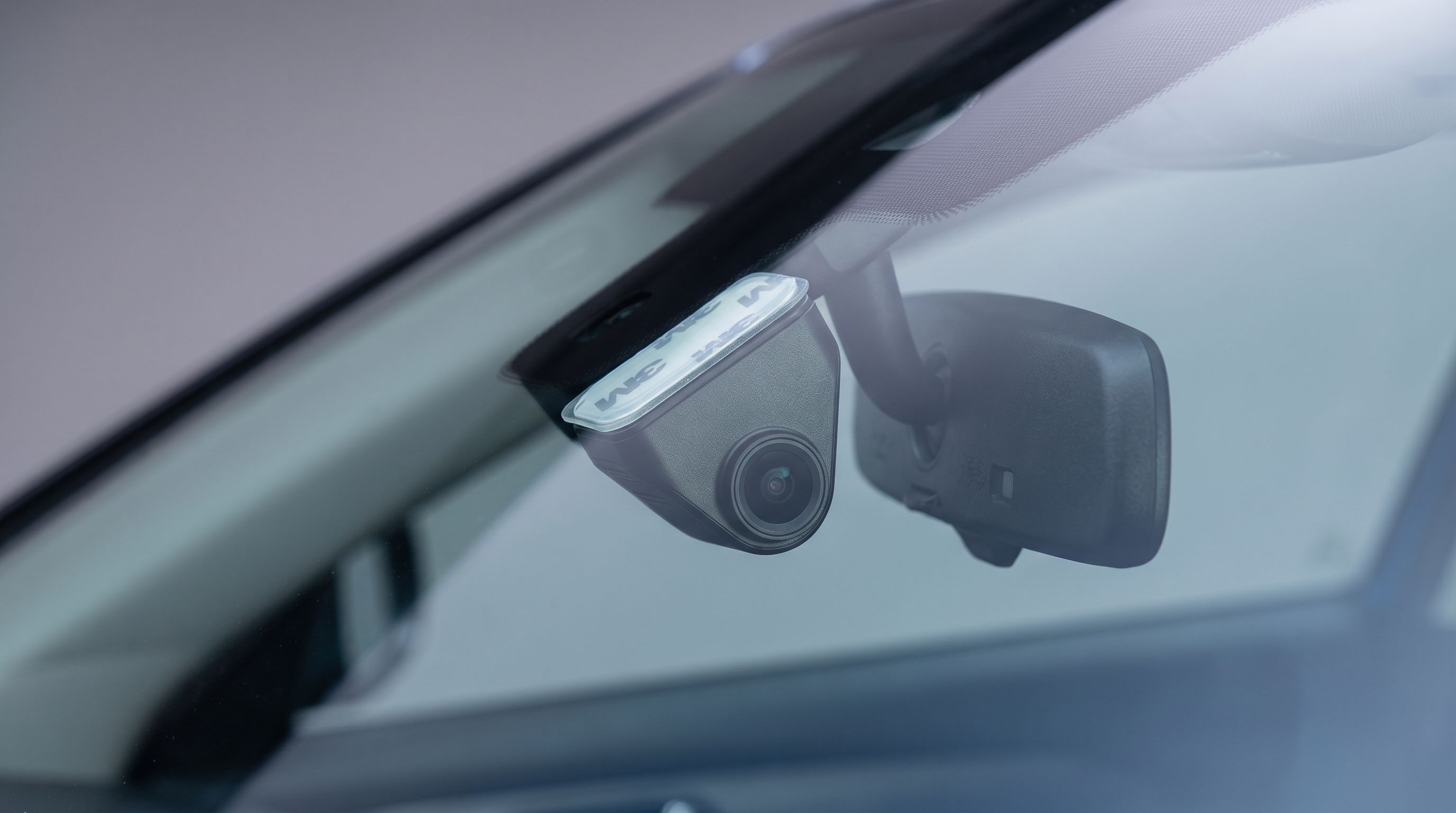
Adhesive 3M mounts are rigid and low-profile, which is ideal in tight spaces — but repositioning means a new pad and a careful removal with fishing line or dental floss. Magnetic or quick-release mounts cost a few millimetres of thickness but let you dry-fit, check clearance against the mirror through its full adjustment range, and move the camera between vehicles.
Plan the cable route around the sensor shroud
The cable is the part people forget. It should run from the camera up into the headliner gap, then across to the A-pillar and down to the fuse box or 12V socket — never horizontally across the ADAS shroud or over the rain sensor window. If the camera's cable port exits on the wrong side for your chosen position, that alone can rule a model out. Check which end the USB-C port sits on.
Weigh parking mode against hardwiring complexity
Parking surveillance needs constant power, which means a hardwire kit and a fuse tap — and on many 2026 vehicles, careful fuse selection to avoid circuits that stay live or that trigger battery-management warnings. If you're not hardwiring, buffered parking mode is moot and you can prioritise a simpler, smaller camera.
Consider a rear camera's mounting constraints too
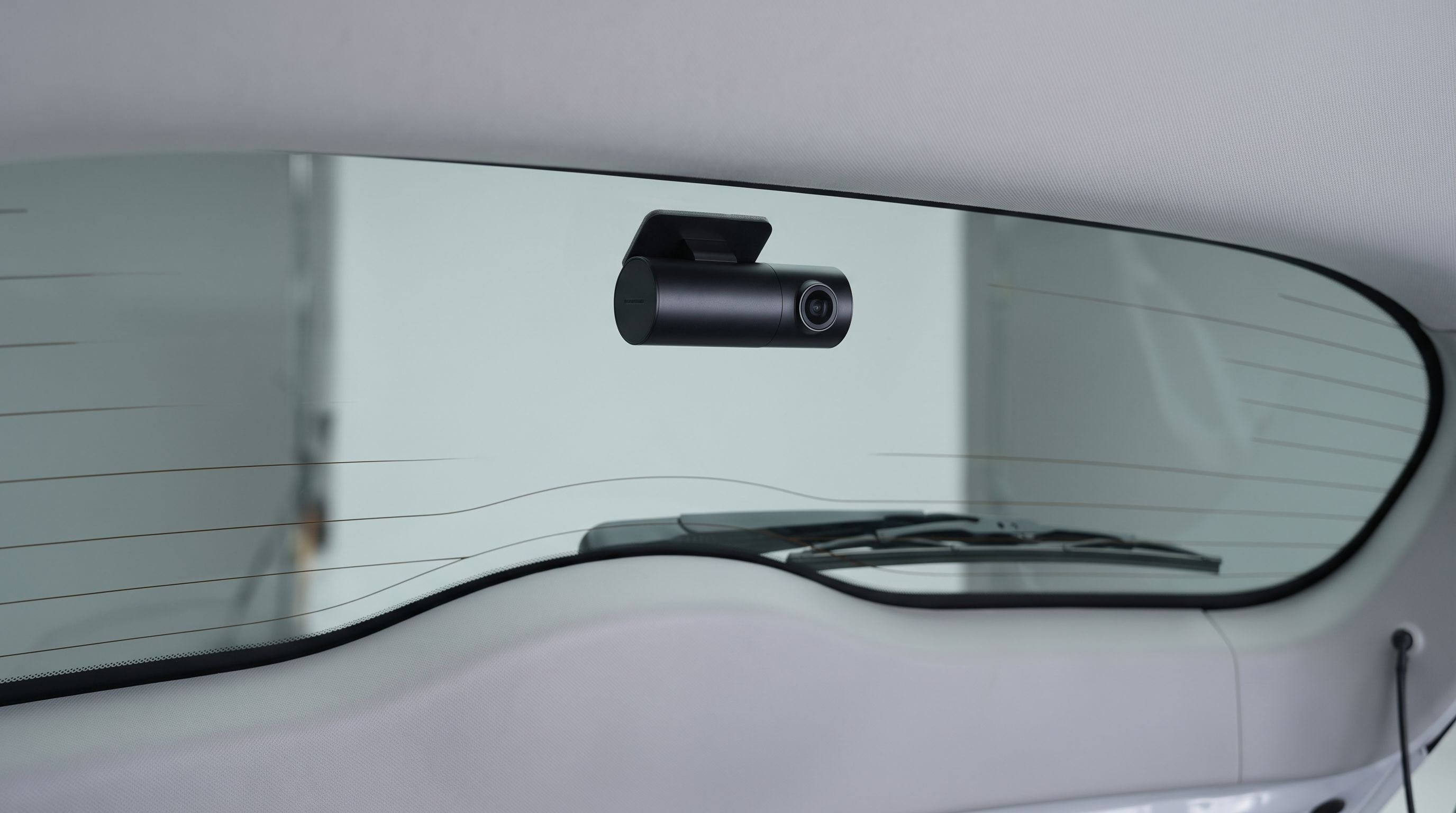
Two-channel kits like the A229 Pro and A329S add a rear camera, which has its own obstacles: rear defroster grid lines, privacy glass, high-mount brake lights and rear wiper motors. Aim to mount between defroster lines, and check your rear glass tint — heavy aftermarket film visibly degrades night footage.
FAQ
Can I stick a dash cam directly onto the rain sensor's plastic cover? Don't. The cover isn't designed to carry load, the adhesive bond to the glass can be disturbed, and any shift changes the sensor's optical path. It also puts the camera's weight on a component that can be expensive to replace. Mount to bare glass inside the frit band instead.
Will a dash cam near the ADAS camera cause fault codes? Only if it intrudes into the camera's field of view or its shroud. Mounted outside the shroud with the cable routed into the headliner, a dash cam is electrically and optically invisible to the ADAS system. If warning lights appear after an install, remove the camera and see whether they clear before chasing anything else.
Is it better to mount left or right of the mirror? Passenger side is usually the better choice: it keeps the camera further from the driver's eyeline and, in left-hand-drive cars, gives slightly better coverage of the lane you're merging into. The real decider is which side has more frit clearance on your specific car.
What if there's genuinely no space anywhere? Two options. A key-fob-sized camera like the Garmin Dash Cam Mini 2 will fit gaps most cameras can't, or you move to a mirror-mounted unit that clamps over the existing rearview mirror and sidesteps the glass entirely. Check first whether your mirror houses sensors or auto-dimming hardware that a clamp would disturb.
Does heat near the top of the windshield damage dash cams? That strip is the hottest part of the cabin in summer, which is why supercapacitor-based cameras — rather than lithium-battery ones — are the right call for a permanent install. All the picks here are built for continuous windshield mounting; very cheap battery-powered cameras often aren't.
Get the best car care deals in your inbox
Join the GarageProof newsletter for hand-picked car care deals and new buying guides. No spam, unsubscribe anytime.
Related reads
Rear Dash Cam for Hatchback Rear Wiper: 2026 Mount Map
Rear wipers and defroster grids ruin rear dash cam placement. Our 2026 guide maps mount spots and cable routing by body style, plus four picks that fit.
Dash Cam Mount for Sloped Windshield: 2026 Wedge Guide
Steeply raked glass ruins dash cam aim. Here's how wedge angle, adhesive vs suction mounts and ball-joint range decide what you should buy in 2026.
Rear Dash Cam for SUV 2026: Cable Runs That Actually Fit
Picking a rear dash cam for an SUV or hatchback? Compare 2026 cable lengths, connector styles and liftgate grommet runs so your rear camera wiring survives.