Coolant Pressure Tester Kit 2026: Match the Cap Adapter
A fitment-first guide to coolant pressure tester kits in 2026 — which cap and filler-neck adapters actually cover domestic, Asian and European cars.
Reader-supported: we may earn a commission from links on this page, at no extra cost to you. It never affects our picks. Learn more.
A coolant pressure tester is one of the few diagnostic tools that pays for itself the first time you use it. Chasing a slow coolant loss by eye can take weeks; pressurizing a cold system to 15 psi and walking around the engine bay with a flashlight usually takes ten minutes.
The catch is that none of this works if the tester won't seal to your car. Every kit on the shelf calls itself "universal," and none of them are. The difference between a kit you love and a kit that lives in a drawer is almost entirely down to one thing: whether the included cap and filler-neck adapters match the vehicles you actually work on.
This guide is built around that question. We compared current kits using manufacturer adapter lists, third-party reviews and verified owner feedback, with an emphasis on adapter coverage across domestic, Asian and European platforms.
The short version
- Best overall: Mastercool 43300
- Best value for mixed fleets: OEMTOOLS 27145
- Best gauge: Astro Pneumatic 78585
- Best budget all-in-one: VEVOR 28-Piece Radiator Pressure Tester and Vacuum Refill Kit
- Best universal adapter add-on: Lisle 24680
 Best universal adapter add-on · Lisle 24680 — Check price on Amazon →
 Best gauge · Astro Pneumatic 78585 — Check price on Amazon →
 Best value for mixed fleets · OEMTOOLS 27145 — Check price on Amazon →
 Best overall · Mastercool 43300 — Check price on Amazon →
Why adapters decide everything
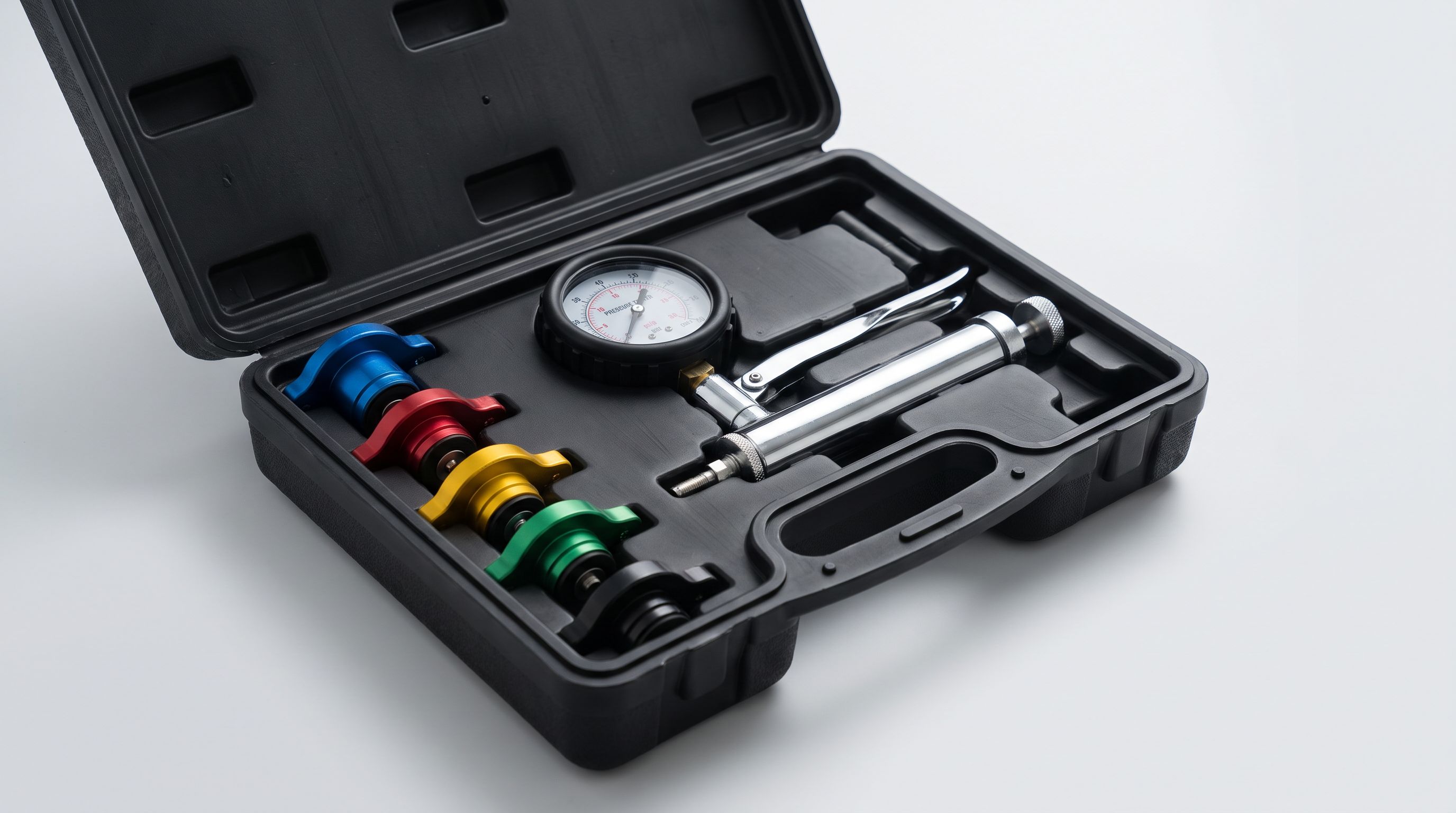
A coolant pressure tester is really three parts: a hand pump with a gauge, an adapter that seals to the filler neck (radiator or expansion tank), and a second adapter that lets you test the pressure cap itself. The pump is simple. The adapters are where kits live or die.
Broadly, you're dealing with four families of connection:
- Domestic radiator necks. Older Ford, GM, Chrysler and most trucks use a classic cam-lock radiator neck. These are the easiest to cover; nearly every kit includes them.
- Asian expansion tanks and necks. Toyota, Honda, Nissan, Subaru, Hyundai and Kia mostly use smaller-diameter cam-lock necks, often on a plastic reservoir. Still cam-lock, but the dimensions and tab spacing differ enough that a loose kit will leak at the seal.
- European screw-on and bayonet caps. This is the real divider. VW and Audi use a large screw-on expansion tank cap. BMW uses its own screw-type design that changed across generations. Mercedes, Volvo and Porsche each have their own. A kit without dedicated European adapters is useless on a Golf, no matter how many pieces are in the box.
- Heavy-duty and diesel. Larger necks, higher cap ratings (often above 20 psi), and sometimes a separate surge tank. Gauges that top out at 30 psi matter here.
Count adapters, but count the right adapters. A 33-piece kit stuffed with duplicate O-rings and a hose is not broader than a 21-piece kit with three European screw caps. Before you buy, open the listing photos, read the adapter table, and confirm your make is named.
How to check fitment for your car
- Open the hood cold and find the pressure cap — radiator neck or expansion tank, whichever holds the system pressure.
- Note the type: cam-lock (push and twist, two tabs), screw-on (threaded, usually German), or bayonet.
- Note the printed pressure rating on the cap, typically shown in bar or psi (0.9 bar ≈ 13 psi, 1.1 bar ≈ 16 psi).
- Measure the neck's outside diameter roughly with calipers or a tape.
- Cross-reference that against the kit's published adapter chart, or search the adapter part number plus your make and model. Owner forums for your specific platform are usually faster than the manufacturer's generic list.
If your vehicle is an outlier, buying a mid-size kit plus one dedicated adapter is almost always cheaper and better-sealing than buying the biggest box on the shelf and hoping.
Comparison table
| Kit | Best for | Adapter emphasis | Vacuum refill | Gauge range (typical) |
|---|---|---|---|---|
| Mastercool 43300 | Overall, pro use | Broad domestic + Asian + European | No | Standard automotive range |
| OEMTOOLS 27145 | Mixed home/shop fleet | Wide general coverage, hard case | No | Standard automotive range |
| Astro Pneumatic 78585 | Heavy-duty, high-pressure systems | Color-coded, domestic/Asian focus | No | Up to 35 psi |
| VEVOR 28-Piece Kit | Budget all-in-one | 17 color-coded caps, 3 covers | Yes (venturi) | Standard automotive range |
| Lisle 24680 | Filling adapter gaps | Single expanding universal neck adapter | N/A | N/A (adapter only) |
Specs vary by production run — always confirm the adapter list and gauge range on the version you're buying.
The picks
Mastercool 43300 — best overall
Prices last checked November 6, 2026. Amazon prices change frequently, so treat these as a guide and check the live price before you buy.
Mastercool 43300
Pro-grade pump and gauge with a deep, well-chosen adapter set that covers most domestic, Asian and European necks.
Mastercool is a refrigeration and cooling-system specialist, and it shows in the build. The pump feels substantial, the gauge is legible, and the adapter selection is chosen by someone who has actually tested a mixed shop's worth of cars rather than padded to hit a piece count. Coverage spans domestic cam-lock necks, the smaller Asian necks, and the screw-on European expansion tanks that cheaper kits skip. It's also the kit most likely to still seal properly in year five, because the adapters use proper seals rather than thin rubber rings.
What you give up: no vacuum refill function, so you'll still need a separate venturi filler or a patient burp procedure. It's also the priciest option here, which is hard to justify if you own two Toyotas and nothing else.
OEMTOOLS 27145 — best value for mixed fleets
OEMTOOLS 27145
Broad adapter coverage in a hard case at a sane price — the sweet spot for a busy home garage.
This is the kit most home mechanics should look at first. OEMTOOLS lands in the middle on price while covering a genuinely wide spread of filler necks and cap sizes, and it ships in a blow-molded case that keeps the adapters organized — which matters more than it sounds, because a loose adapter is a lost adapter. Owner feedback consistently reports solid seals on common domestic and Asian applications, with the usual caveat that a few European platforms need a dedicated adapter.
The trade-off is finish quality. Pump handles and gauge housings aren't at Mastercool's level, and some adapters are plastic where a pro kit uses metal. For a few tests a year on a family fleet, that's an easy compromise.
Astro Pneumatic 78585 — best gauge
Astro Pneumatic 78585
35 psi color-coded gauge and sturdy pump for heavy-duty and higher-pressure systems.
If you work on trucks, diesels or anything with a higher-rated cap, gauge range stops being a detail. The Astro kit runs to 35 psi with a color-coded face, so you can read a 20 psi heavy-duty system without pegging the needle at the top of the scale — and color coding makes it obvious at a glance when pressure is bleeding down. The pump is sturdy and the adapters are color-matched to speed up selection.
What you give up: European coverage is the weak spot, so VW, Audi and BMW owners should plan on an add-on adapter. There's no vacuum refill here either, and the higher-range gauge is marginally less precise on a low-pressure 13 psi system.
VEVOR 28-Piece Radiator Pressure Tester and Vacuum Refill Kit — best budget all-in-one

VEVOR 28-Piece Radiator Pressure Tester and Vacuum Refill Kit
Pressure test plus venturi vacuum refill with 17 color-coded caps — most coverage per dollar.
The pitch is coverage plus function for one modest price: 17 color-coded test caps, three test covers, and a venturi vacuum refill head that pulls the system down with shop air and then draws coolant in without trapping bubbles. For anyone who's spent an hour bleeding a transverse four-cylinder, that second half is the real value. It covers the common domestic and Asian necks well, and the color coding makes adapter selection quick.
The compromises are predictable at this price. Seals and plastic adapters are the first thing owners report wearing, the gauge is basic, and you'll want to double-check the included adapter list against anything European before ordering. As an occasional-use kit, it's a lot of capability for the money.
Lisle 24680 — best universal adapter add-on
Lisle 24680
Expanding universal neck adapter that fills the gaps when your kit lacks an odd filler size.
Not a kit — a fix. The Lisle universal adapter expands inside an awkward filler neck to create a seal where no dedicated cap in your box fits, which is exactly the situation you hit on an uncommon import, an older truck, or a plastic tank that's been replaced with an aftermarket part. Keep it in the case and it turns a "can't test this one" day into a ten-minute job.
Understand its limits: it won't test the pressure cap itself, it's less secure than a proper cam-lock or screw-on adapter, and on a hot or high-pressure system you need to be careful it doesn't unseat. Treat it as a gap-filler alongside a real kit, not as a replacement for one.
How to choose
Match the adapter list to your actual vehicles
Write down the makes you service, check the cap type on each, then confirm those adapters by name in the kit's chart. If more than one European car is in the mix, prioritize kits that explicitly list VW/Audi, BMW and Mercedes adapters — or budget for a dedicated add-on from the start. Adapter count is a marketing number; adapter match is the real spec.
Decide if you want vacuum refill too
Pressure testing and vacuum refilling are different jobs that often share a kit. Vacuum refill uses shop air through a venturi to evacuate the system, then draws coolant in — no air pockets, no 20-minute burp cycle. It needs a compressor capable of sustained flow. If you have air and you do coolant jobs, a combo kit like the VEVOR earns its keep. If you only need to find a leak, a dedicated tester is better built per dollar.
Check gauge range against cap rating
Most passenger cars run 13–18 psi caps. A standard gauge is fine and easier to read at low pressures. Heavy-duty and some diesel systems use higher-rated caps, where the Astro Pneumatic 78585's 35 psi scale gives you headroom. Never pressurize above the cap's rating — you can split a heater core or pop a plastic tank seam, converting a small leak into a large repair.
Look at seal and material quality
The parts that fail are O-rings, cap gaskets and plastic adapter bodies. Metal adapters and replaceable seals extend a kit's useful life considerably. If you're buying budget, buy spare O-rings at the same time and store the case somewhere that isn't 110°F all summer.
Using the kit without breaking anything
- Only test a cold engine. Releasing a hot pressure cap is a genuine burn hazard.
- Pressurize to the cap's rated figure, not beyond. Stop and inspect if the needle climbs fast.
- Watch the gauge for five to fifteen minutes. A steady drop with no visible wet spot points to an internal leak — head gasket, heater core, or an intake/oil cooler path.
- Test the cap separately. A weak cap spring causes overheating and overflow that mimics a far worse problem, and it's the cheapest fix in the cooling system.
- Pair with UV dye for pinhole leaks that only weep under pressure and heat.
- Release pressure through the pump's bleed valve before removing the adapter.
FAQ
Will one "universal" kit really fit every car? No. Universal means "many," not "all." Kits with strong domestic and Asian coverage often skip European screw-on expansion tank caps, and some newer platforms need a model-specific adapter. Check the chart before you buy.
How much pressure should I apply? Match the rating printed on your pressure cap — commonly 0.9 to 1.3 bar (roughly 13 to 19 psi) on passenger cars. Exceeding it risks damaging hoses, plastic tanks and the heater core.
The pressure drops but I can't see a leak. Now what? Suspect an internal path: head gasket, cracked head, heater core leaking into the cabin, or a transmission/oil cooler. Check for coolant in the oil, sweet-smelling condensation on the windshield, and damp carpet on the passenger side. A combustion-gas test on the coolant is the logical next step.
Do I need the vacuum refill function? Only if you do coolant replacements and have a compressor that can sustain airflow. It genuinely removes air pockets on hard-to-bleed engines. For leak diagnosis alone, it's optional.
Can I test the cap with any kit? Most kits include a cap adapter, but the specific one for your cap style may not be in the box — especially for European screw caps. Confirm it's listed, because testing the cap is half the value of owning the tool.
Is a cheap kit good enough for occasional use? For a few tests a year, yes, provided the adapters fit your cars. Buy spare seals, store it dry, and don't over-pressurize. If you're testing weekly or working on customer vehicles, the better pump and seals of a Mastercool or OEMTOOLS kit pay back in reliability.
Get the best car care deals in your inbox
Join the GarageProof newsletter for hand-picked car care deals and new buying guides. No spam, unsubscribe anytime.
Related reads
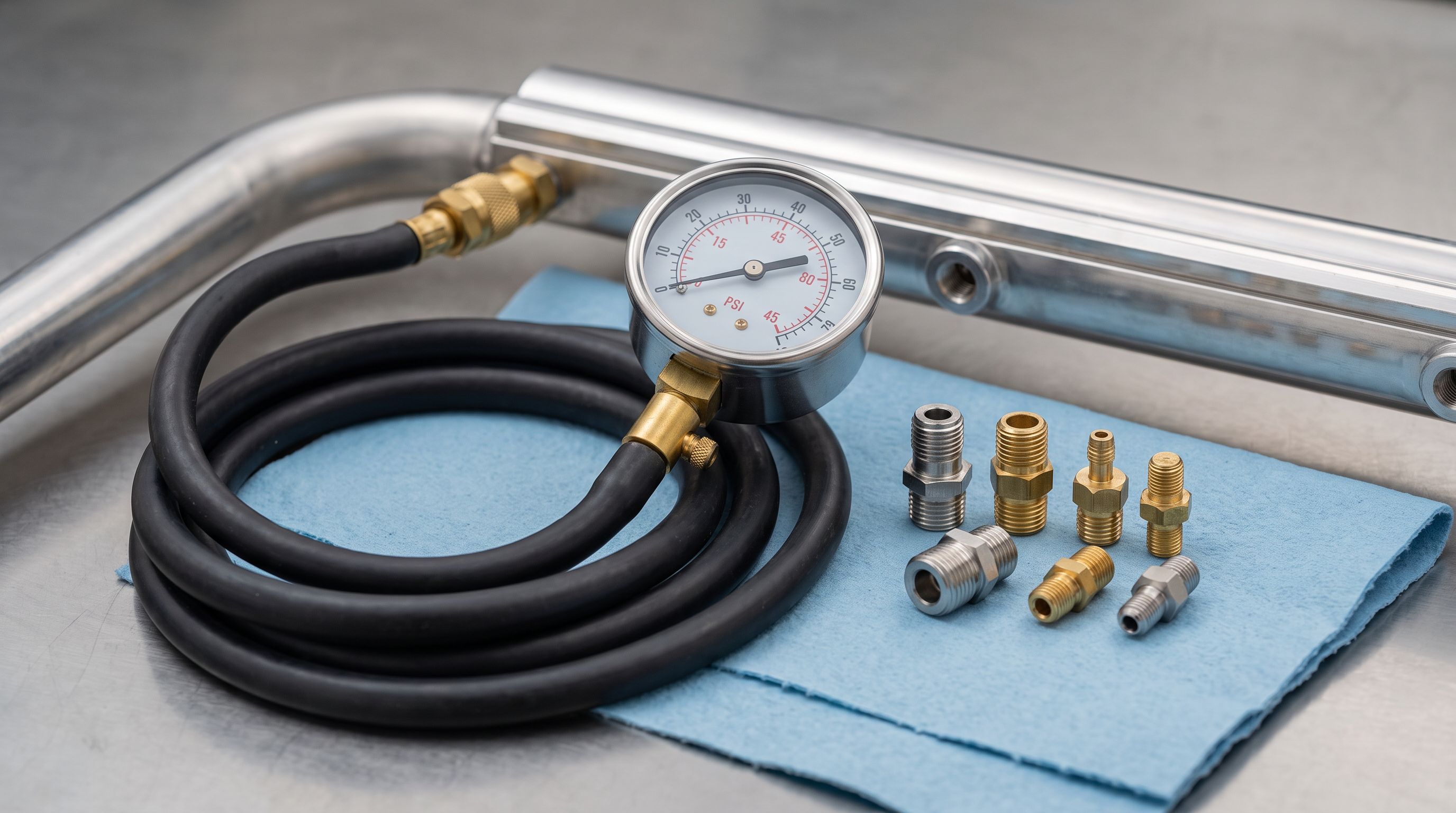
Fuel Pressure Test Kit 2026: Match the Rail Fitting First
Fuel pressure test kit guide for 2026: how to identify your Schrader port, banjo or quick-connect test point, pick the right gauge range, and avoid useless adapters.
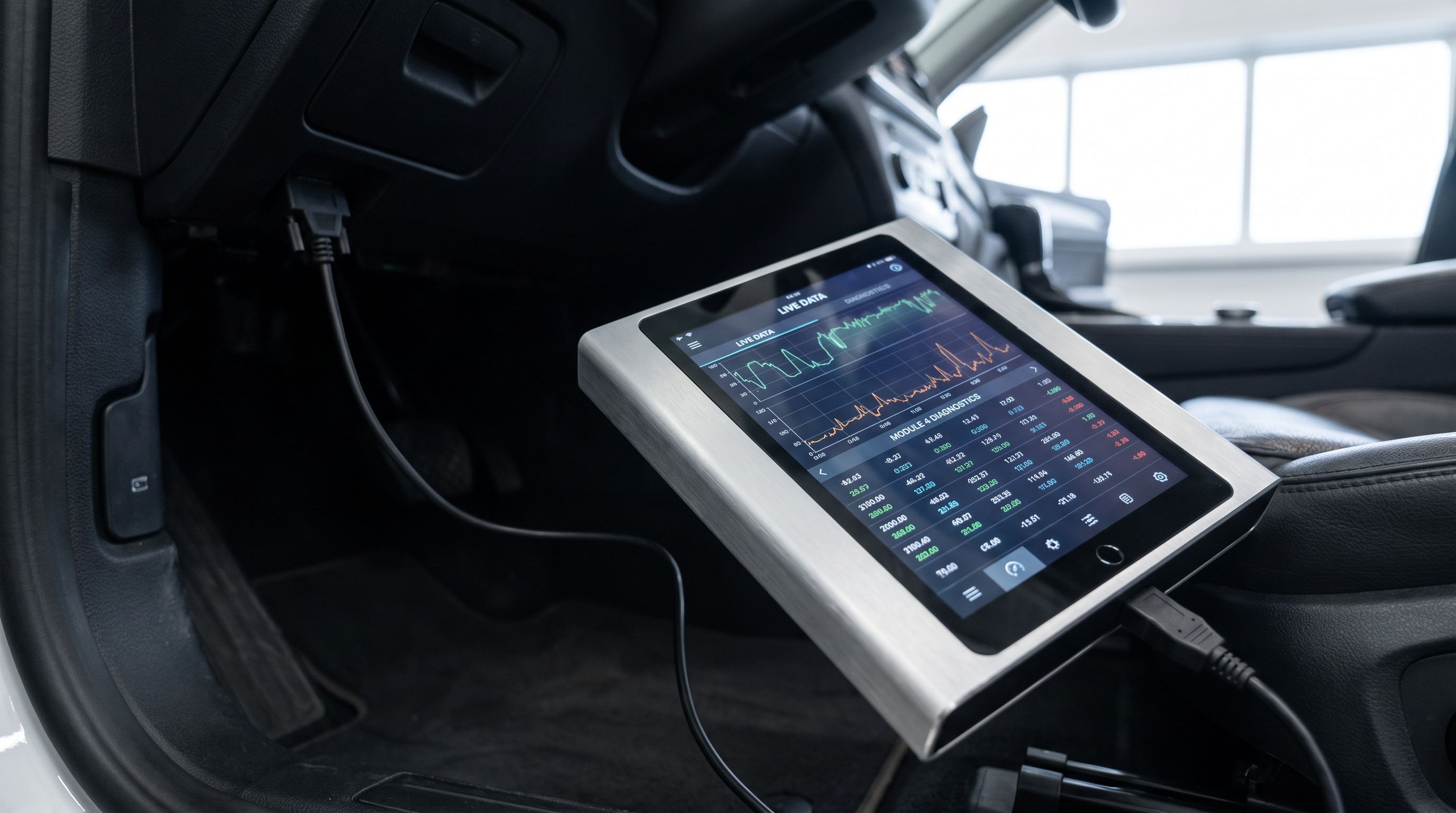
ECU Coding Scan Tool in 2026: Do You Actually Need One?
ECU coding scan tool vs mid-tier bidirectional in 2026: which tier you actually need, what coding really unlocks, and 5 tools ranked by module coverage.
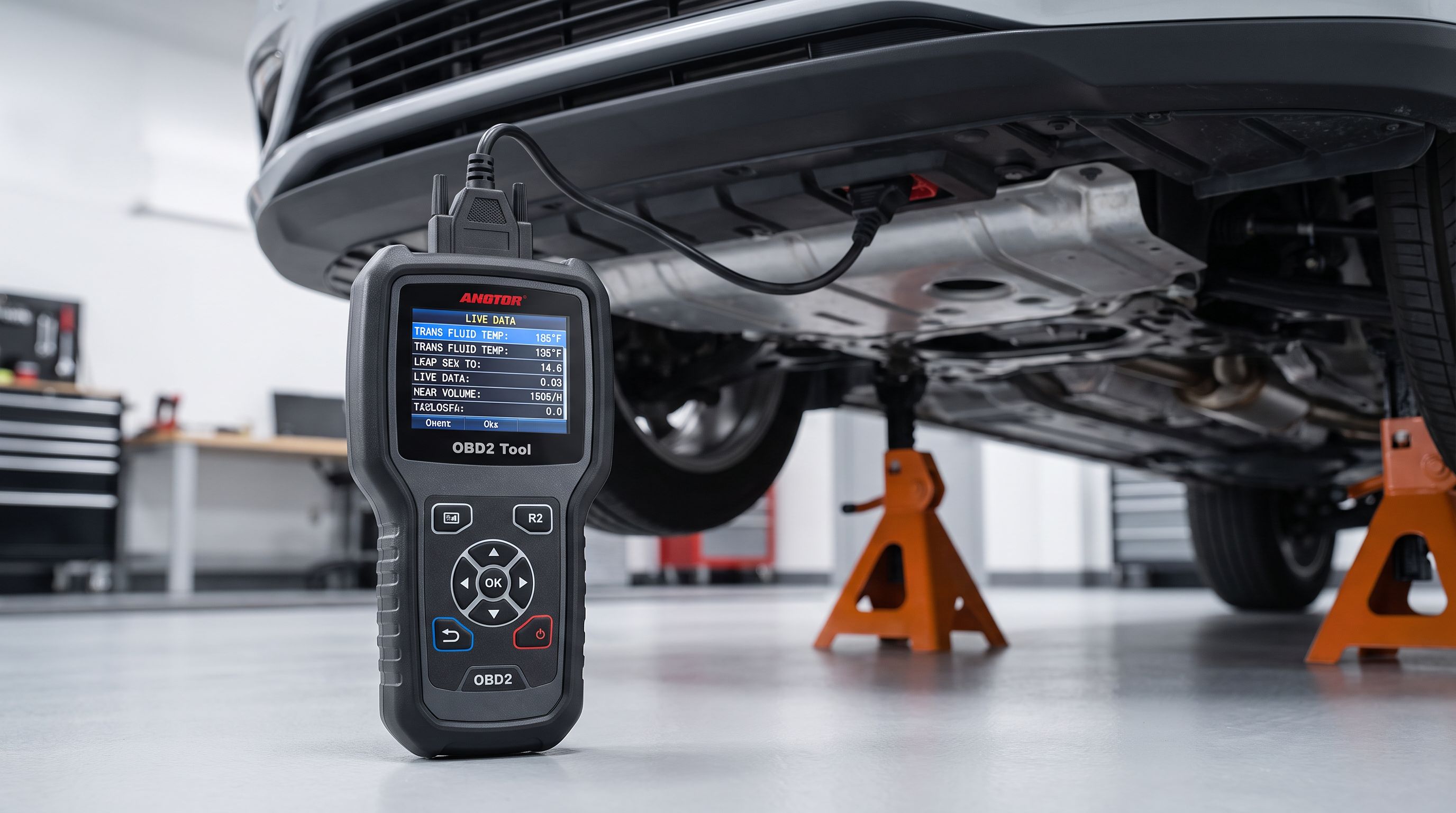
Scan Tools That Read Transmission Fluid Temp in 2026
Most modern automatics have no dipstick. We compare scan tools by whether they read live transmission fluid temperature PIDs for your make in 2026.